Here is a sonnet for Ascension Day, the glorious finale of the Easter Season.
In the mystery of the Ascension we reflect on the way in which, one sense Christ ‘leaves’ us and is taken away into Heaven, but in another sense he is given to us and to the world in a new and more universal way. He is no longer located only in one physical space to the exclusion of all others. He is in the Heaven which is at the heart of all things now and is universally accessible to all who call upon Him. And since His humanity is taken into Heaven, our humanity belongs there too, and is in a sense already there with him.”For you have died”, says St. Paul, “and your life is hidden with Christ in God”. In the Ascension Christ’s glory is at once revealed and concealed, and so is ours. The sonnet form seemed to me one way to begin to tease these things out.
Please feel free to make use of this, and my other sonnets in church services and to copy and share them. If you can mention the book from which they are taken that would be great.
As always you can hear the sonnet by clicking on the ‘play’ button if it appears in your browser or by clicking on the title of the poem.
I’m grateful to Oliver Neale for the image above, the image below was taken as we launched rockets to celebrate Ascension day at Girton College:
We saw his light break through the cloud of glory
Whilst we were rooted still in time and place
As earth became a part of Heaven’s story
And heaven opened to his human face.
We saw him go and yet we were not parted
He took us with him to the heart of things
The heart that broke for all the broken-hearted
Is whole and Heaven-centred now, and sings,
Sings in the strength that rises out of weakness,
Sings through the clouds that veil him from our sight,
Whilst we our selves become his clouds of witness
And sing the waning darkness into light,
His light in us, and ours in him concealed,
Which all creation waits to see revealed .
If you are enjoying these posts, you might like, on occasion,(though not every time of course!) to pop in and buy me a cup of coffee. Clicking on this banner will take you to a page where you can do so, if you wish.
Icon of Julian with her cat by Br Robert Lentz OFM
The 8th of May is the feast day of Julian of Norwich, sometimes known as Mother Julian or Lady Julian. She was an English Mystic of the late fourteenth Century, living as an anchoress in Norwich. Her life as an anchoress, finding Christ in isolation, and then finding that Christ transfigured that isolation into a communion of love, was an inspiration for many during lockdown. Her ‘Shewings’, or Revelations of Divine Love, a series of mystical visions of and conversations with Jesus, remain a source of profound wisdom and a gift to the church, present and future. For a good introduction to her work I recommend Julia Bolton Holloway’s website, she is herself an anchoress in Florence, and Robert Llewlyn’s classic work ‘With Pity, not With Blame, now reprinted by the Canterbury Press.
This poem is from my book The Singing Bowl which you can buy on Amazon or order from any good bookshop. Please feel free to use this poem in services, and print it in service bulletins, just include a brief acknowledgement that it comes from ‘The Singing Bowl’, Canterbury Press, 2013. Thanks
As always you can hear the poem by clicking on the ‘play’ button or on the title.
Who makes, and loves, and keeps us in each moment,
And looks on us with pity not with blame.
Keep telling me, for all my faith may waver,
Love is his meaning, only love, forever.
From the Amhurst Manuscript of Julian’s showings
If you would like to encourage and support this blog, you might like, on occasion, (not every time of course!) to pop in and buy me a cup of coffee. Clicking on this banner will take you to a page where you can do so, if you wish. But please do not feel any obligation!
The feast of the Annunciation, usually falls on March 25th but that was in Holy Week this year, and so the beginning of Christ’s story was briefly eclipsed by its climax, but the feast is not forgotten, and has been transferred to the 8th of April..
The Annunciation, the visit of Gabriel to the blessed virgin Mary, is that mysterious moment of awareness, assent and transformation in which eternity touches time. In my own small take on this mystery I have thought about vision, about what we allow ourselves to be aware of, and also about freedom, the way all things turn on our discernment and freedom.
The scripture that says of Mary that “All generations’ will call her “blessed”, It is true that some Christians have disagreed with one another bitterly about her, but equally, in every age and every church she has been, for many Christians, a sign of hope, an example of prayer, devotion and service, and an inspiration.
In a strange way, which I will write about one day, she was a sign of hope to me even before I was a Christian, and it was something numinous and beautiful in the paintings and poetry she has inspired that helped lead me to her Son.
I thought for this feast day, I would offer a quintet of sonnets in her honour, gathering together the four sonnets about her which are part of my wider collection ‘Sounding the Seasons’. and then adding a fifth, based on the antiphon O Virgo Virginum. The first four take us, from the Annunciation and her ‘yes’ to the angel, through the Visitation, with its beautiful magnificat, to the birth of Jesus, and then to her presence with him on the via dolorosa and at the foot of the cross. The final sonnet invokes her prayer and aid for the many women exploited and betrayed in our own age.
As always you can hear the poems by clicking the ‘play’ button if it appears, or clicking on the title.
This darker path into the heart of pain
Was also hers whose love enfolded him
In flesh and wove him in her womb. Again
The sword is piercing. She, who cradled him
And gentled and protected her young son
Must stand and watch the cruelty that mars
Her maiden making. Waves of pain that stun
And sicken pass across his face and hers
As their eyes meet. Now she enfolds the world
He loves in prayer; the mothers of the disappeared
Who know her pain, all bodies bowed and curled
In desperation on this road of tears,
All the grief-stricken in their last despair,
Are folded in the mantle of her prayer.
Heres is an extra ‘fifteenth’ sonnet for Easter Morning, which I dedicate to my friend Mary who asked me to write it, and to the memory of her husband Gavin. May he rest in peace and rise in glory.
Later today I will publish another Easter poem, but this completes the sonnet series I have been posting throughout Holy Week.
This sonnet, and the others I have been posting for Holy Week are all drawn from my collection Sounding the Seasons, published by Canterbury Press here in England. The book is now back in stock on both Amazon UK and USA and physical copies are shortly to be available in Canada via Steve Bell‘s Signpost Music. The book is now also out on Kindle. Please feel free to make use of these sonnets in church services and to copy and share them. If you can mention the book from which they are taken that would be great.
I am grateful to Oliver Neale for permission to use the image above. as always you can hear the sonnet by clicking on the ‘play’ button or on the title.
Holy Saturday is a strange, still day, hanging in the balance between the suffering and sorrow of Good Friday and the Joy of Easter, life is paused, but also perhaps poised on the threshold of the new.
When I wrote the two ‘stations’ sonnets I am posting today I was conscious of how these great Christian festivals, especially Easter and Christmas, draw up and carry with them some of our deepest family memories. If we are going to remember and miss someone we have loved and lost, we will do it now. So in the second sonnet I have moved from a contemplation of the women bearing spices and wishing they could at least anoint the one they miss, to focus on the many people who will visit graves and memorial plaques over this weekend, ‘Renewing flowers, tending the bare earth’. All those ‘beautiful useless gestures’, all that ‘love poured out in silence’ is, I believe, somehow gathered together in these three days and sown deep in the ground of God’s love, ready for the day when he will make all things new again.
That need, expressed in these sonnets bon to honour grief and yet to bring a whisper of hope to the grieving, seems more pressing than ever.
Please feel free to make use of these poems in anyway you like, and to reproduce them, but I would be grateful if you could include in any hand-outs a link back to this blog and also a note to say they are taken from ‘Sounding the Seasons; seventy Sonnets for the Christian Year, Canterbury Press 2012′ so that people who wish to can follow the rest of the sequence through the church year, or obtain the book, can do so. The book has an essay on poetry in liturgy with suggestions as to how these and the other sonnets can be used. The book is now back in stock on both Amazon UK and USA It is now also out on Kindle.
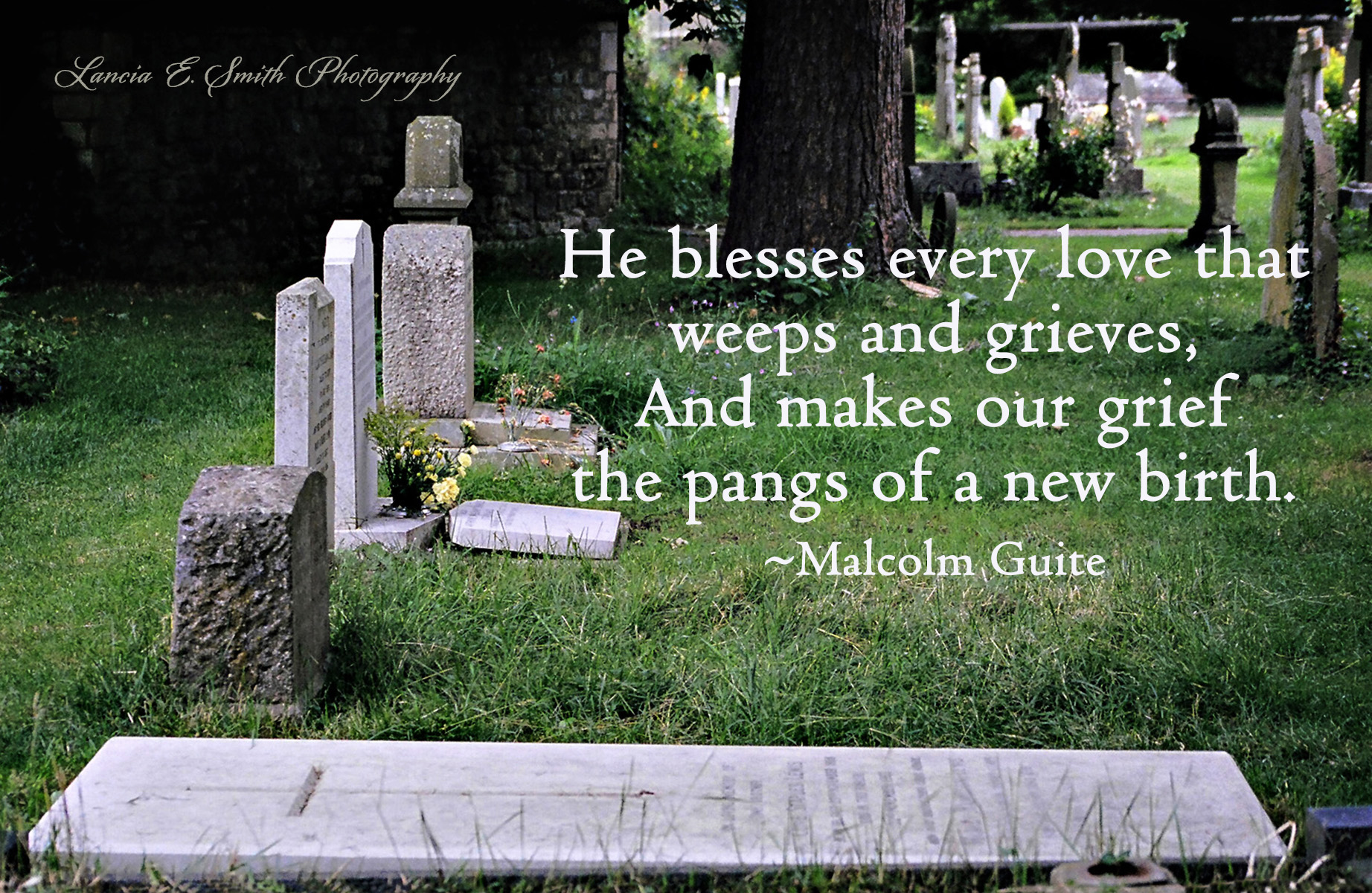
The Images above are by Lancia Smith, I have also read the sonnets onto audioboo, so you can click on the ‘play’ button or on the title of each poem to hear it.
His spirit and his life he breathes in all
Now on this cross his body breathes no more
Here at the centre everything is still
Spent, and emptied, opened to the core.
A quiet taking down, a prising loose
A cross-beam lowered like a weighing scale
Unmaking of each thing that had its use
A long withdrawing of each bloodied nail,
This is ground zero, emptiness and space
With nothing left to say or think or do
But look unflinching on the sacred face
That cannot move or change or look at you.
Yet in that prising loose and letting be
He has unfastened you and set you free.
Here at the centre everything is still
Before the stir and movement of our grief
Which bears it’s pain with rhythm, ritual,
Beautiful useless gestures of relief.
So they anoint the skin that cannot feel
Soothing his ruined flesh with tender care,
Kissing the wounds they know they cannot heal,
With incense scenting only empty air.
He blesses every love that weeps and grieves
And makes our grief the pangs of a new birth.
The love that’s poured in silence at old graves
Renewing flowers, tending the bare earth,
Is never lost. In him all love is found
And sown with him, a seed in the rich ground.
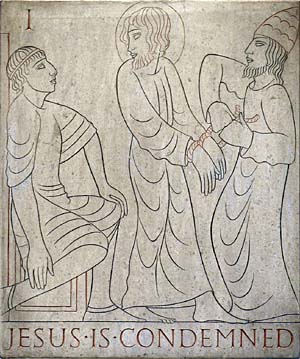
In my Anthology of poems for Leant and Holy Week The Word in the Wilderness, I set just one of my Stations of the cross sonnets for Good Friday, Station XII, but as this blog is not so constricted for space I thought I would share with you the first 12 stations. We will read the 13th and 14th tomorrow on Holy Saturday and then on Easter Morning we will have the 15th’ resurrection’ station and also a new villanelle that I have written for easter Morning.
The Stations of the Cross, which form the core of my book Sounding the Seasons and are intended to be read on Good Friday.
Please feel free to make use of them in anyway you like, and to reproduce them, but I would be grateful if you could include in any hand-outs a link back to this blog and also a note to say they are taken from ‘Sounding the Seasons; seventy Sonnets for the Christian Year, Canterbury Press 2012′ so that people who wish to can follow the rest of the sequence through the church year, or obtain the book, can do so. The book has an essay on poetry in liturgy with suggestions as to how these and the other sonnets can be used. The book is now back in stock on both Amazon UK and USA
The Image above is courtesy of Lancia Smith. The Images below are taken from a set of stations of the cross in St. Alban’s church Oxford. I have also read the sonnets onto audioboo, so you can click on the ‘play’ button or on the title of each poem to hear it.
This darker path into the heart of pain
Was also hers whose love enfolded him
In flesh and wove him in her womb. Again
The sword is piercing. She, who cradled him
And gentled and protected her young son
Must stand and watch the cruelty that mars
Her maiden making. Waves of pain that stun
And sicken pass across his face and hers
As their eyes meet. Now she enfolds the world
He loves in prayer; the mothers of the disappeared
Who know her pain, all bodies bowed and curled
In desperation on this road of tears,
All the grief-stricken in their last despair,
Are folded in the mantle of her prayer.
In desperation on this road of tears
Bystanders and bypassers turn away
In other’s pain we face our own worst fears
And turn our backs to keep those fears at bay
Unless we are compelled as this man was
By force of arms or force of circumstance
To face and feel and carry someone’s cross
In Love’s full glare and not his backward glance.
So Simon, no disciple, still fulfilled
The calling: ‘take the cross and follow me’.
By accident his life was stalled and stilled
Becoming all he was compelled to be.
Make me, like him, your pressed man and your priest,
Your alter Christus, burdened and released.
Bystanders and bypassers turn away
And wipe his image from their memory
She keeps her station. She is here to stay
And stem the flow. She is the reliquary
Of his last look on her. The bloody sweat
And salt tears of his love are soaking through
The folds of her devotion and the wet
folds of her handkerchief, like the dew
Of morning, like a softening rain of grace.
Because she wiped the grime from off his skin,
And glimpsed the godhead in his human face
Whose hidden image we all bear within,
Through all our veils and shrouds of daily pain
The face of god is shining once again.
Through all our veils and shrouds of daily pain,
Through our bruised bruises and re-opened scars,
He falls and stumbles with us, hurt again
When we are hurt again. With us he bears
The cruel repetitions of our cruelty;
The beatings of already beaten men,
The second rounds of torture, the futility
Of all unheeded pleading, every scream in vain.
And by this fall he finds the fallen souls
Who passed a first, but failed a second trial,
The souls who thought their faith would hold them whole
And found it only held them for a while.
Be with us when the road is twice as long
As we can bear. By weakness make us strong.
You can’t go on, you go on anyway
He goes with you, his cradle to your grave.
Now is the time to loosen, cast away
The useless weight of everything but love
For he began his letting go before,
Before the worlds for which he dies were made,
Emptied himself, became one of the poor,
To make you rich in him and unafraid.
See as they strip the robe from off his back
They strip away your own defences too
Now you could lose it all and never lack
Now you can see what naked Love can do
Let go these bonds beneath whose weight you bow
His stripping strips you both for action now
See, as they strip the robe from off his back
And spread his arms and nail them to the cross,
The dark nails pierce him and the sky turns black,
And love is firmly fastened onto loss.
But here a pure change happens. On this tree
Loss becomes gain, death opens into birth.
Here wounding heals and fastening makes free
Earth breathes in heaven, heaven roots in earth.
And here we see the length, the breadth, the height
Where love and hatred meet and love stays true
Where sin meets grace and darkness turns to light
We see what love can bear and be and do,
And here our saviour calls us to his side
His love is free, his arms are open wide.
The dark nails pierce him and the sky turns black
We watch him as he labours to draw breath
He takes our breath away to give it back,
Return it to it’s birth through his slow death.
We hear him struggle breathing through the pain
Who once breathed out his spirit on the deep,
Who formed us when he mixed the dust with rain
And drew us into consciousness from sleep.
His spirit and his life he breathes in all
Mantles his world in his one atmosphere
And now he comes to breathe beneath the pall
Of our pollutions, draw our injured air
To cleanse it and renew. His final breath
Breathes us, and bears us through the gates of death.
So many gospel themes find their focus on Maundy Thursday, so many threads of connection flowing to and from this deep source of love and vision, in the foot washing, and in the last supper.
The meditation in this sonnet, is centred on the ancient idea of the four elements of earth, air, water and fire, for it struck me as I contemplated the events of Maundy Thursday, both the foot-washing and the first communion, that all these elements of the old creation are taken up by Jesus and transformed in the making of the new. Jesus is both the fully human companion cleansing his friends with a gentle touch, sharing his last supper with them, showing the fullness of his love, and he also the Word, God in his full creative and shaping power, the One in and through whom everyone in that room, and every element of the world is sustained in the beauty and particularity of its being. What we witness in the birth of the sacraments is both a human drama and a divine act of new creation. As we receive the familiar sacrament of this night, it may be, that if our eyes and ears are open we will sense Christ’s all-transforming presence even through the ordinary elements of the place where we are.
This sonnet, and the others I have been posting for Holy Week are all drawn from my collection Sounding the Seasons, published by Canterbury Press here in England. The book is now back in stock on both Amazon UK and USA . The book is now also out on Kindle. Please feel free to make use of these sonnets in church services and to copy and share them. If you can mention the book from which they are taken that would be great.
If you would like to encourage and support this blog, you might like, on occasion, (not every time of course!) to pop in and buy me a cup of coffee. Clicking on this banner will take you to a page where you can do so, if you wish. But please do not feel any obligation!
John 12 1-8, tells us of how Mary of Bethany anointed Jesus. I love this intense and beautiful moment in the Gospels, The God of the Cosmos enters as a vulnerable man into all the particular fragility of our human friendships and intimacy. I love the way Jesus responds to Mary’s beautiful, useless gesture and recognises it as something that is always worth while, something that will live forever, for all the carping and criticism of Judas, then and now.
This sonnet, and the others I will be posting for Holy Week are all drawn from my collection Sounding the Seasons, published by Canterbury Press here in England. The book is now back in stock on both Amazon UK and USA. The book is now also out on Kindle. Please feel free to make use of these sonnets in church services and to copy and share them. If you can mention the book from which they are taken that would be great.
I’m grateful to Lancia Smith for the image above. As always you can hear the poem by clicking on the title or the ‘play’ button
Come close with Mary, Martha , Lazarus
So close the candles stir with their soft breath
And kindle heart and soul to flame within us
Lit by these mysteries of life and death.
For beauty now begins the final movement
In quietness and intimate encounter
The alabaster jar of precious ointment
Is broken open for the world’s true lover,
The whole room richly fills to feast the senses
With all the yearning such a fragrance brings,
The heart is mourning but the spirit dances,
Here at the very centre of all things,
Here at the meeting place of love and loss
We all foresee, and see beyond the cross.
If you would like to encourage and support this blog, you might like, on occasion, (not every time of course!) to pop in and buy me a cup of coffee. Clicking on this banner will take you to a page where you can do so, if you wish. But please do not feel any obligation!
When Solomon dedicated the Temple he rightly declared that not even the Heaven of Heavens could contain almighty God, much less this temple made with hands, yet God himself still came into the temple. He came as a baby, the essence of all light and purity in human flesh, he came as a young boy full of questions, seeking to know his father’s will, and today he came in righteous anger to clear away the blasphemous barriers that human power-games try to throw up between God and the world he loves. Then finally, by his death on the cross he took away the last barrier in the Temple, and in our hearts, the veil that stood between us and the Holy of Holies, the very presence of God, in us and beyond us.
But these outward events are also inward ones. We cannot go out to the outer edifice of church or cathedral this week, but we can certainly invite Christ to come in to us, and that is what I do in this sonnet, with its fourfold cry for Christ to come into the temple of my heart.
This sonnet, and the others I will be posting for Holy Week are all drawn from my collection Sounding the Seasons, published by Canterbury Press here in England. The book is now back in stock on both Amazon UK and USA . The book is now also out on Kindle. Please feel free to make use of these sonnets in church services and to copy and share them. If you can mention the book from which they are taken that would be great.
If you would like to encourage and support this blog, you might like, on occasion, (not every time of course!) to pop in and buy me a cup of coffee. Clicking on this banner will take you to a page where you can do so, if you wish. But please do not feel any obligation!
The feast of the Annunciation, usually falls on March 25th but that was in Holy Week this year, and so the beginning of Christ’s story was briefly eclipsed by its climax, but the feast is not forgotten, and has been transferred to the 8th of April..
The Annunciation, the visit of Gabriel to the blessed virgin Mary, is that mysterious moment of awareness, assent and transformation in which eternity touches time. In my own small take on this mystery I have thought about vision, about what we allow ourselves to be aware of, and also about freedom, the way all things turn on our discernment and freedom.
The scripture that says of Mary that “All generations’ will call her “blessed”, It is true that some Christians have disagreed with one another bitterly about her, but equally, in every age and every church she has been, for many Christians, a sign of hope, an example of prayer, devotion and service, and an inspiration.
In a strange way, which I will write about one day, she was a sign of hope to me even before I was a Christian, and it was something numinous and beautiful in the paintings and poetry she has inspired that helped lead me to her Son.
I thought for this feast day, I would offer a quintet of sonnets in her honour, gathering together the four sonnets about her which are part of my wider collection ‘Sounding the Seasons’. and then adding a fifth, based on the antiphon O Virgo Virginum. The first four take us, from the Annunciation and her ‘yes’ to the angel, through the Visitation, with its beautiful magnificat, to the birth of Jesus, and then to her presence with him on the via dolorosa and at the foot of the cross. The final sonnet invokes her prayer and aid for the many women exploited and betrayed in our own age.
As always you can hear the poems by clicking the ‘play’ button if it appears, or clicking on the title.
This darker path into the heart of pain
Was also hers whose love enfolded him
In flesh and wove him in her womb. Again
The sword is piercing. She, who cradled him
And gentled and protected her young son
Must stand and watch the cruelty that mars
Her maiden making. Waves of pain that stun
And sicken pass across his face and hers
As their eyes meet. Now she enfolds the world
He loves in prayer; the mothers of the disappeared
Who know her pain, all bodies bowed and curled
In desperation on this road of tears,
All the grief-stricken in their last despair,
Are folded in the mantle of her prayer.

 Here is a sonnet for Ascension Day, the glorious finale of the Easter Season.
 We have lift off!


 The feast of the Annunciation, usually falls on March 25th but that was in Holy Week this year, and so the beginning of Christ’s story was briefly eclipsed by its climax, but the feast is not forgotten, and has been transferred to the 8th of April..




 Malcolm Guite